
Kalle Koivunen is reducing his farm’s carbon footprint through the Carbon-Neutral Dairy Farm pilot: “I want to showcase the results of climate work”
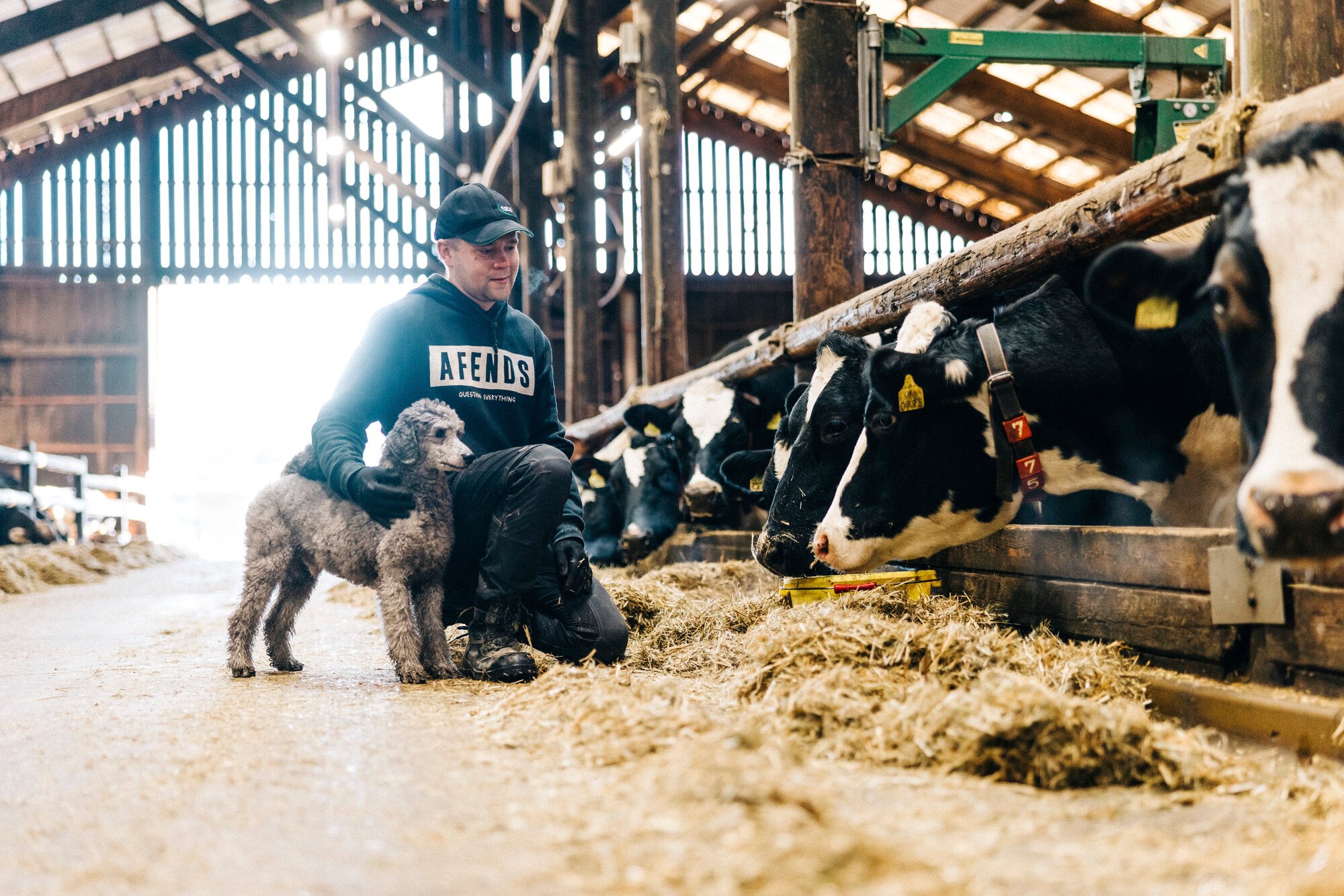
In the village of Liedenpohja, in Virrat, Finland, the autumn harvest is at its busiest. Kalle Koivunen works on a nearby farm, harvesting fodder and taking hay to the chopper for shredding. At home on the Tulimaito agricultural enterprise farm, he has 150 dairy cattle and a 100-head young livestock.
Kalle Koivunen has been responsible for the farm since 2022. For him, as a young farmer, it’s important to secure the future of dairy production and to find ways to make the farm’s production increasingly sustainable.
Tulimaito is one of the four farms participating in Valio’s five-year Carbon-Neutral Dairy Farm pilot project. The pilot is testing in practice how different climate actions can be implemented in everyday farm life, how climate actions contribute to the reduction of emissions, and what their cost impacts and benefits are. The aim is to reduce carbon emissions from milk production to zero.
“I want to advance things, not remain stagnant. Quite often it seems that producers are blamed when it comes to climate issues. I want to show that we are working towards responsible milk production, and I look forward to the pilot bringing more concrete results and new ways to reduce the farm’s carbon footprint.”
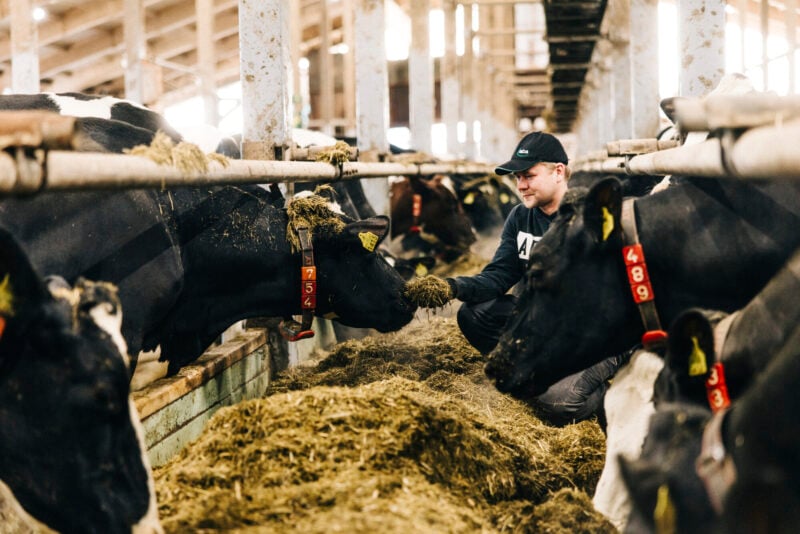
Successes boost motivation
Koivunen is inspired by the ambitious goal of the pilot, which is to achieve carbon neutrality in the farm’s milk production within five years. Koivunen’s expectation is that reducing emissions in milk production will bring financial benefit.
“Investments always take money – or at least work time. Development of biodiversity is important in itself, of course, but for the farmer the financial result is important.”
Koivunen thinks participating in the pilot project brings new excitement to his own work.
“There certainly can be failures every now and then, but I believe that the pilot will bring a lot of successful experiences. These increase motivation and confidence in the future.”
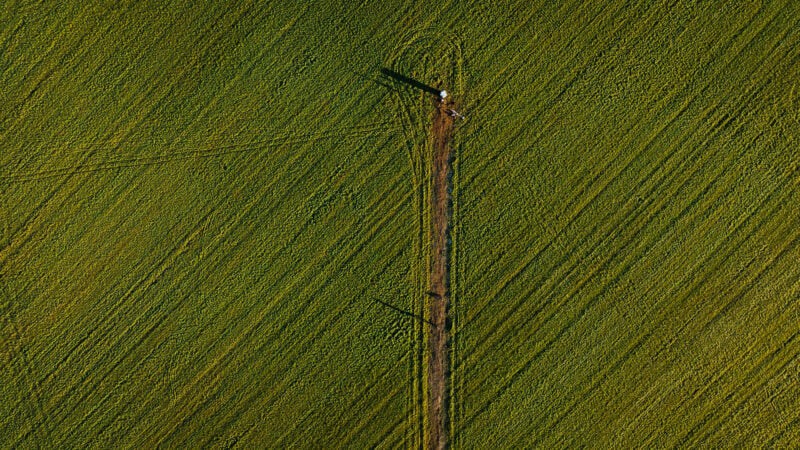
More data on the carbon sequestration of fields
The carbon footprint of the Tulimaito farm has been tracked with the Valio Carbo Farm calculator since 2019. Last year, the carbon footprint of the farm’s raw milk was measured at 0.74 CO2e/kg ECM, compared to the Valio farm average of 1.2 CO2e/kg ECM. The global average is more than double that of Valio farms.
Koivunen says the farm has long been involved in carbon farming, which uses the right kind of farming methods and plant choices to sequester carbon in the soil.
“Animals have been bred to be more sustainable, more productive and healthier. We separate the liquid manure to make bedding, and we don’t use peat as bedding. We use a feeding solution that research shows reduce the amount of methane produced by cow digestion by up to 30%.”
In arable farming, biodiversity is increased in a variety of ways, including through flower fields and grazing. A solar panel project is underway to provide electricity for the farm.
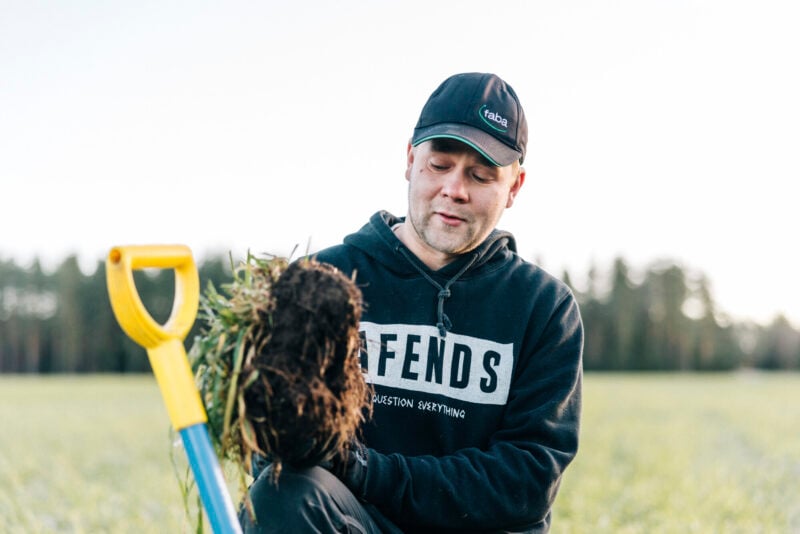
“Carbon samples are taken from the soil in one pilot field parcel. These samples can be used to measure how much carbon is sequestered in the field parcel. It is precisely the field that we need more data about, as carbon sequestration takes place in a multi-species grass field,” Kalle Koivunen notes.
These are the climate actions that have been or are being taken
- Carbon farming
- Breeding animals to be more sustainable, more productive and healthier
- Solar panel project underway for electricity generation
- Feed solution reducing the amount of methane produced by cow digestion. Studies show that it reduces the amount of methane produced during cow digestion by up to 30%
- Liquid manure is separated and turned into bedding. Peat is not used as bedding
- Various measures to increase biodiversity in arable farming
- Grazing
- Carbon sampling and measurement of carbon sequestration in the test field parcel