Practical testing of carbon-neutral milk production actions on Mikko Heikkinen’s farm: “The goal is a more economically viable business”
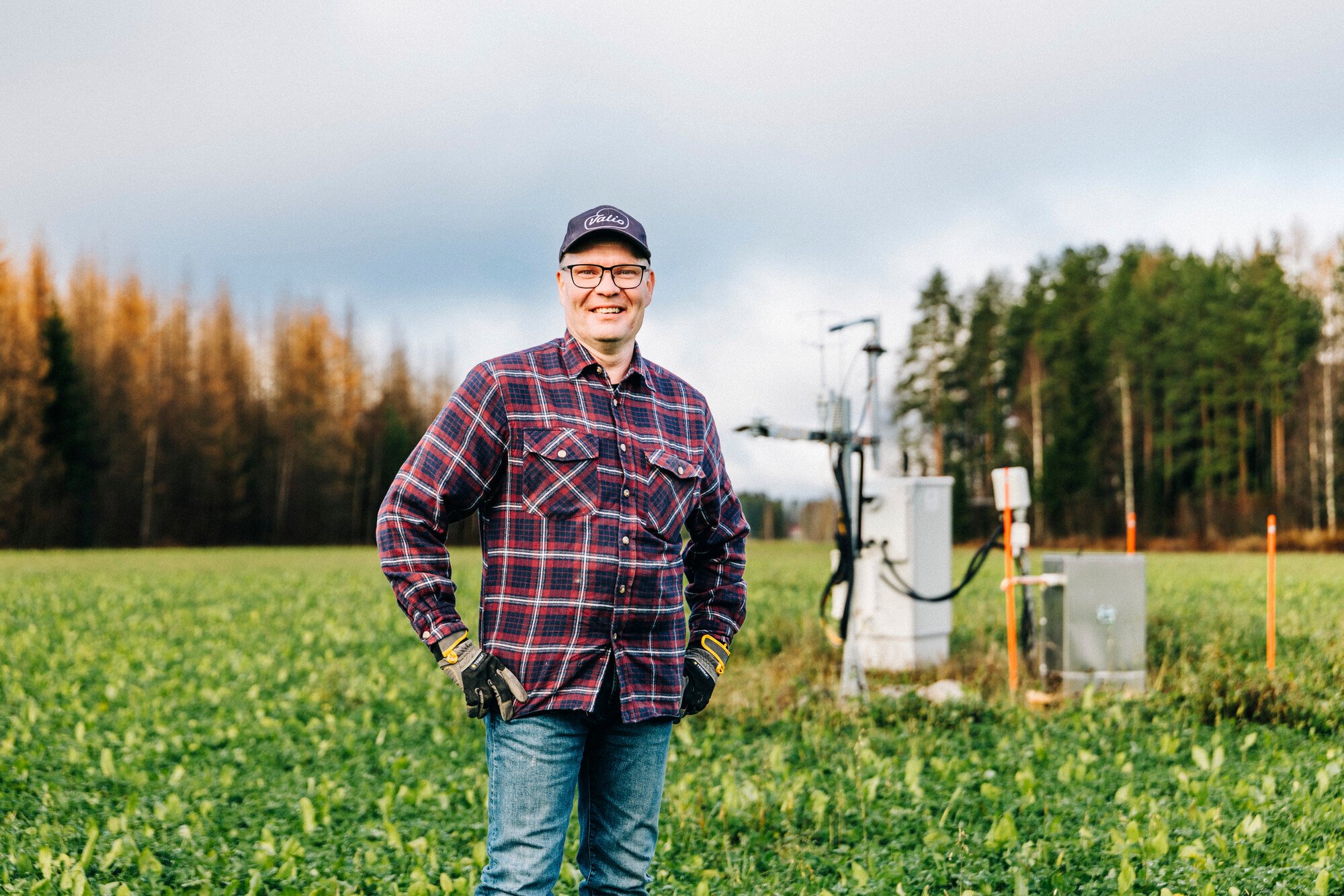
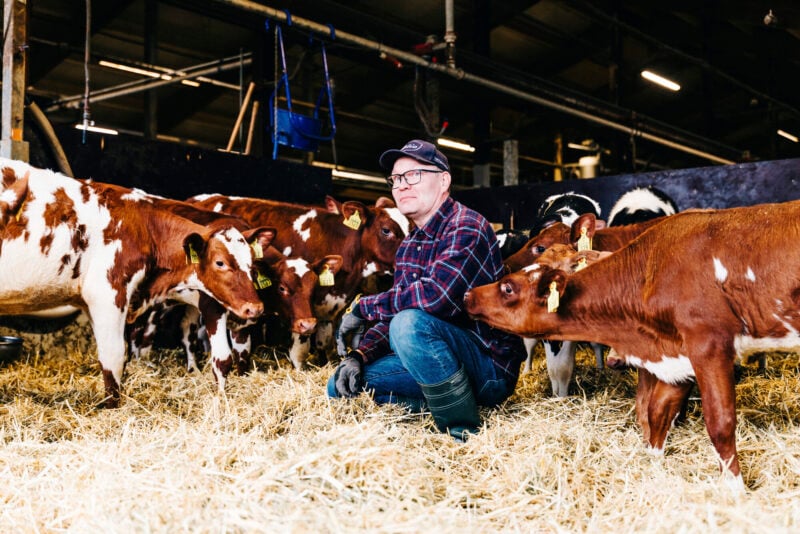
Mikko Heikkinen, Valio Supervisory Board Chairman and owner of the Likolahti dairy farm, arrives for the interview directly from the barn. With the new milking system that the barn has gotten in early 2025, the size of the dairy herd will be increased by a couple dozen – to a total of 200 cows.
“My brother and I bought the farm in 2005. We started with 19 cows and 22 hectares of arable land,” Heikkinen recalls.
Now there are about 260 hectares of arable land. Over a couple of decades, the brothers have increased the size of the farm by more than 10-fold. The farm is also involved in Valio and St1 Biokraft’s jointly launched biogas business and is one of Suomen Lantakaasu Oy’s contract farms.
The Likolahti farm is one of the four farms participating in Valio’s five-year Carbon-Neutral Dairy Farm pilot project. The pilot is testing in practice how different climate actions can be implemented in everyday farm life, how they contribute to the reduction of emissions, and what their cost impacts and benefits are. The aim is to reduce carbon emissions from milk production to zero.
“I’m very interested in the pilot and with the idea that our farm has the potential to serve as an example both for Valio people and various research organisations of how different farming methods and techniques work in practice. There is a lot of research and knowledge, and now we need experience and evidence of how it all works on farms.”
On the right track for a long time
The Likolahti farm has taken various emission reduction and climate actions for a long time. Participating in the pilot has confirmed Heikkinen’s belief that the actions taken have been the right ones. However, he stresses that this is only the startup phase. The time to draw more detailed conclusions will come later.
“The project will collect data on different actions. At the moment, we are already doing a lot of crop rotation, cultivating multispecies grass mixtures, and testing different tillage methods and their effects on yields.”
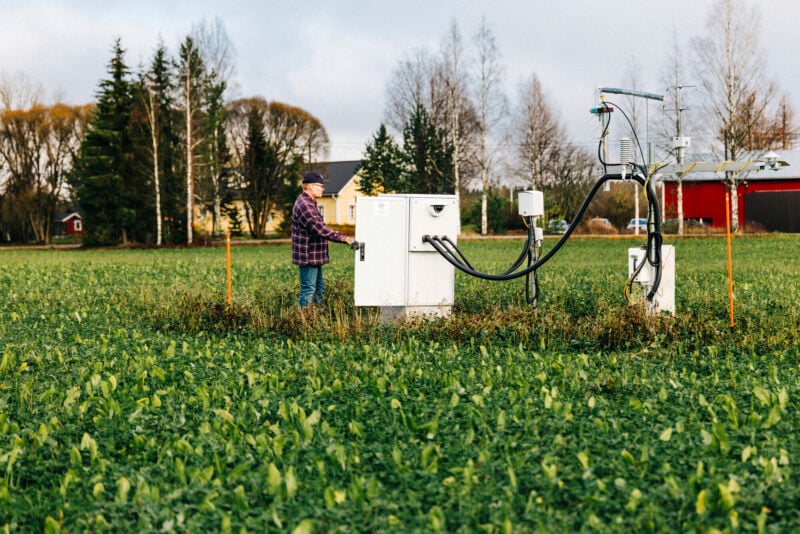
Heikkinen has established a perennial grassland on a field parcel in Kangaslahti. The Finnish Meteorological Institute has installed a fixed monitoring device in the field to measure the carbon sequestration capacity of the grass field for five years.
“It’s really interesting to be involved in a project that is being done specifically at the farm level. I feel that we are in a privileged position. We get to have a say in how things happen in practice. That’s a big motivator for me.”
Win-win
Another motivator is money. Heikkinen believes that by working towards carbon neutrality, farms can save on costs and increase revenues.
“With the pilot, I want to be in the process of finding a balance that will lead to a better financial outcome. That’s the premise of the whole thing. Milk production has to be economically sustainable, otherwise it isn’t profitable for entrepreneurs. If this can be made to work, it’s a win-win: both for nature and the entrepreneur.”
Three points
Increasing renewable energy, feeding livestock while reducing methane emissions and farming based on good crop rotation. Heikkinen believes these are the three points that are most important on the journey towards carbon-neutral milk production.
“There are no quick wins in this. Monitoring must be done with a sufficiently long-term perspective. Everything affects the carbon footprint, and some of the effects are very long term,” Heikkinen notes.
Heikkinen is a strong believer in the future of Finnish dairy farmers. Finland has favourable conditions for milk production, a willingness to adopt new farming methods and good prospects for sustainable and profitable food production.
“It’s a turbulent sector, and that’s probably not going to change. But I’m looking to the future with confidence. We own the dairy chain. The whole thing is in our own hands.”