Questions and answers about packaging
All of Valio’s single-use packaging sold in Finland is designed to be easily recycled through packaging collection systems. In terms of materials, they are designed for recycling so that valuable raw materials can be reused instead of ending up in mixed waste. On this page, you’ll find answers to the most common questions about packaging and clear instructions for everyday sorting.
How much does packaging contribute to a product’s carbon footprint?
The production of food always has a greater environmental and climate impact than the production of packaging. The biggest factor impacting a product’s carbon footprint over its life cycle is food waste, which effective packaging prevents.
Why is recycling so important and what happens to recycled materials?
Manufacturing completely new packaging materials is almost always more detrimental to the environment than using recycled materials.
Separately collected plastic is processed at a plastic recycling plant into recycled plastic, which is used as a raw material in, e.g., packaging for Valio’s sliced cheese. The aluminium lids from yoghurt and fermented milk containers, in turn, are used as raw material for new metal products. Valio promotes material recycling and is a shareholder in Finnish Packaging Producers Ltd and SUMI Oy.
What does ‘packaging made from renewable materials’ mean?
It means that the primary materials used to make the packaging come from renewable natural resources rather than fossil-based raw materials, such as oil. Nearly all of Valio’s gabled cartons for milk, buttermilk, cream, and yoghurt are made from renewable materials*: the paperboard is made from wood fibre, and the thin inner plastic film that protects the product, as well as the cap, are made from plant-based bioethanol.
How should different Valio packages be sorted?
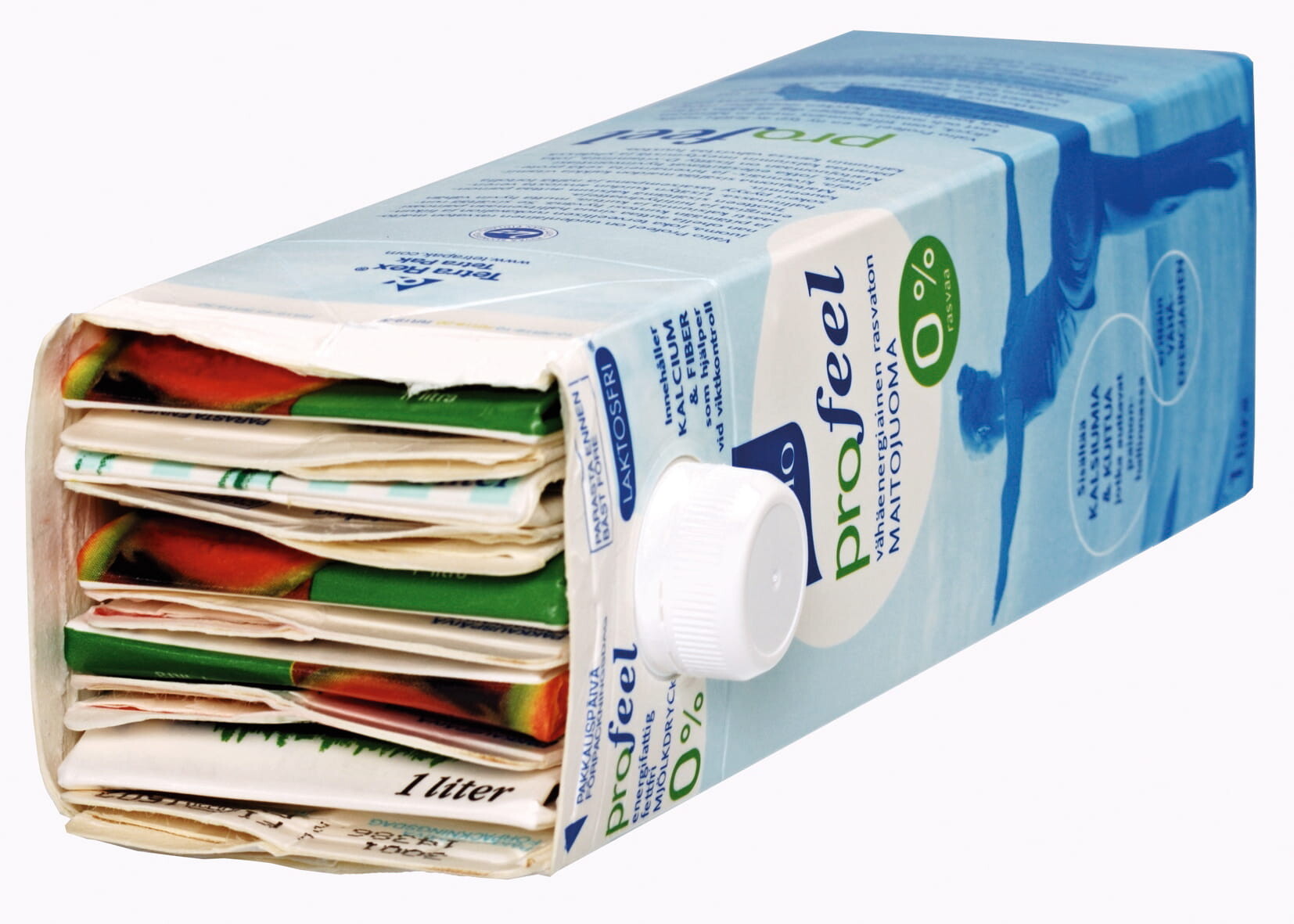
- Paperboard cartons (milk, yoghurt, etc.): Rinse, crush, and sort into the cardboard recycling bin. You can leave the plastic cap attached to the carton – it will be separated during industrial processing – or you can sort it into the plastic recycling bin.
- Plastic cups (e.g. traditional yoghurt and fermented milk cups): The cup and plastic lid belong in the plastic recycling bin. The aluminium lid belongs in the metal recycling bin.
- Cups with paperboard sleeves: Remove the paperboard sleeve from the plastic cup and sort it into the cardboard recycling bin. The plastic cup and plastic lid belong in the plastic recycling bin; the aluminium lid always belongs in the metal recycling bin.
- New paperboard cups (e.g. Valio PROfeel® quarks): Manufactured using a new technology, the cup is made primarily of paperboard with a plastic coating to protect the product. The cup is recycle-ready and belongs in the carboard recycling bin; the lid is sorted into the metal recycling bin. At the recycling plant, the fibres are separated to produce recycled paperboard, and the plastic coating is used to generate energy.
- Ice cream cups: The paperboard cup and paper lid belong in the cardboard recycling bin; an aluminium lid goes in the metal recycling bin.
- Cheese packaging: Cheese packaging (e.g. sliced and block cheeses) are sorted into the plastic recycling bin. For exceptions, such as Valio AURA® and Koskenlaskija® cheeses, separate instructions are marked directly on the packaging.
Why do packages lack clear recycling labels?
In Finland, material and recycling labels (such as arrows, numbers and letter abbreviations) on packaging are voluntary, and they are often difficult for consumers to understand. That’s why Valio uses easy-to-understand, plain-language, and written recycling instructions on its packaging to make sorting as straightforward as possible in everyday life.
In addition, recycling instructions for every Valio product can be found on the Valio product pages of the respective product.
*Excluding 1.75 L Valio Whipping Cream and 1 L Valio Eila® Organic Semi-Skimmed Milk Drink