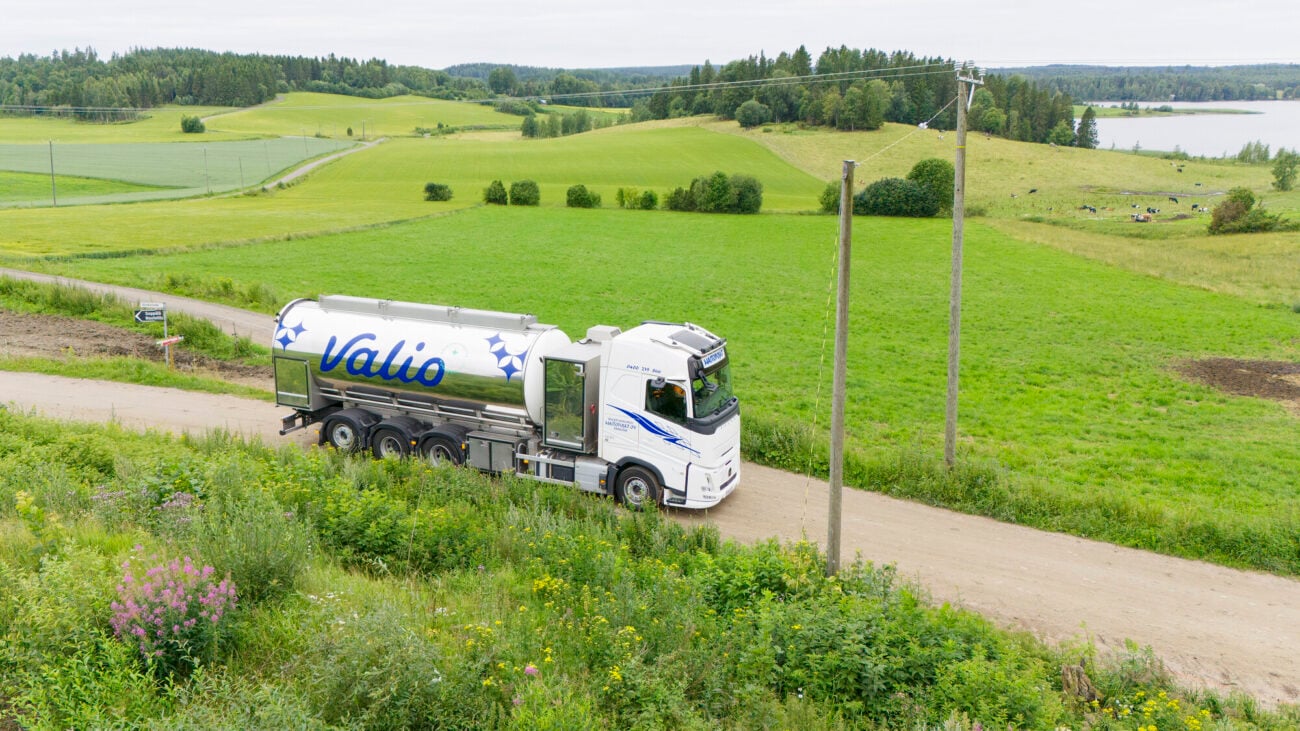
Valio is growing the use of biogas in its transports by replacing the fleet of milk collection trucks and product delivery and distribution trucks with low-emission options. The goal is to transition to renewable energy sources in logistics by 2035. Biogas-powered vehicles reduce our transports’ greenhouse gas emissions by up to 90 per cent compared to traditional diesel-powered vehicles. This is why biogas is a key solution for reducing emissions in Valio's logistics. *
Valio is undergoing ambitious emission reduction work as part of its strategy. Reducing transport emissions plays a key role in these efforts. Using biogas in our logistics will reduce greenhouse gas emissions from transport by up to 90 % compared to diesel. Valio’s goal is to gradually increase the number of biogas-powered vehicles on its path to lower the emissions in the logistics.
Gradual progress in the transition to low-emission logistics
At Valio, reducing emissions is an everyday task that is mainly carried out by optimising routes and transitioning to low-emission fuels as the refuelling station network develops. “Route planning and efficient operations play a key role. The most environmentally friendly mile is the one that is not driven. That is also the most cost-effective. Environmentally friendly solutions will take care of the rest of the emissions,” says Mika Jyrkönen, Valio Head of Logistics, responsible for product distribution and exports.
The refuelling station must be located along the transport route to efficiently and reliably deploy the fleet, even in exceptional situations. “We can add more biogas vehicles as the refuelling station network matures. When we renew our fleet or update our transport agreements, we always assess the possibility of switching to low-emission fuels. The goal is to gradually grow the low-emission fleet,” says Petteri Laine, Valio Head of Logistics, responsible for milk collection and transport.
Transport companies have also accepted the introduction of biogas-fuelled vehicles in their daily operations, and gas-fuelled vehicles have proven to be practical. “Gas-fuelled vehicles have worked well, and there is hardly any difference in practical driving compared to diesel vehicles. Our drivers were eager to see the introduction of new technology and haven’t had to significantly change their daily routines,” says Antero Mansoniemi from Mansoniemi Transport Oy.
Experiences in Pello and Lapland have also been positive. “The vehicles have performed well even during periods of extreme cold, proving to be dependable. The benefits of biogas-fuelled vehicles include quiet and fuel-efficient engines and lower emissions compared to diesel,” says Timo Pihkakoski from T. Pihkakoski Oy.
Biogas is well suited for heavy-duty transport, and the vehicles can travel for long distances. Their travel distance varies from short urban delivery routes to daily runs of hundred-plus kilometres.
Aiming for logistics powered by renewable energy sources
It is Valio’s goal for its entire transport fleet to use renewable energy sources, such as biogas, electricity, or renewable diesel, depending on the task. The transition is proceeding gradually. There is a plan for each vehicle and transport route on which replacement technology will be used when it’s time for an overhaul.
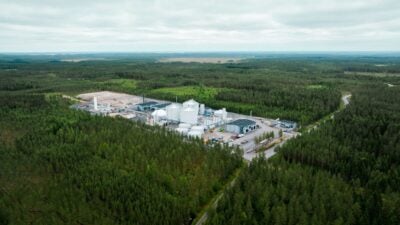
To Valio, reducing logistics emissions and the use of fossil fuels is a process of continuous development, in which the fleet overhaul, the development of infrastructure, and the efficient planning of transports go hand in hand. Suomen Lantakaasu, owned by Valio and St1 Biokraft, produces liquefied biogas for heavy-duty transport from agricultural and food industry by-products.
Facts: Biogas-fuelled fleet
- Valio currently operates 11 biogas-fuelled milk collection trucks, which will grow to 13 by the end of this year.
- The distribution and delivery fleet currently features 13 biogas-fuelled vehicles, which will grow to 23 by the end of this year.
- In 2025, Valio Logistics used biogas-fuelled vehicles to travel 392,000 kilometres, resulting in a reduction of 262,000 kg of CO₂e compared to diesel. *
- Our biogas-powered milk collection trucks were driven a total of over 2.44 million kilometres in 2025.
* Calculations and emission reduction estimates are based on the emission factors of the UK Department for Environment, Food and Rural Affairs (Defra).