
Food system of the future
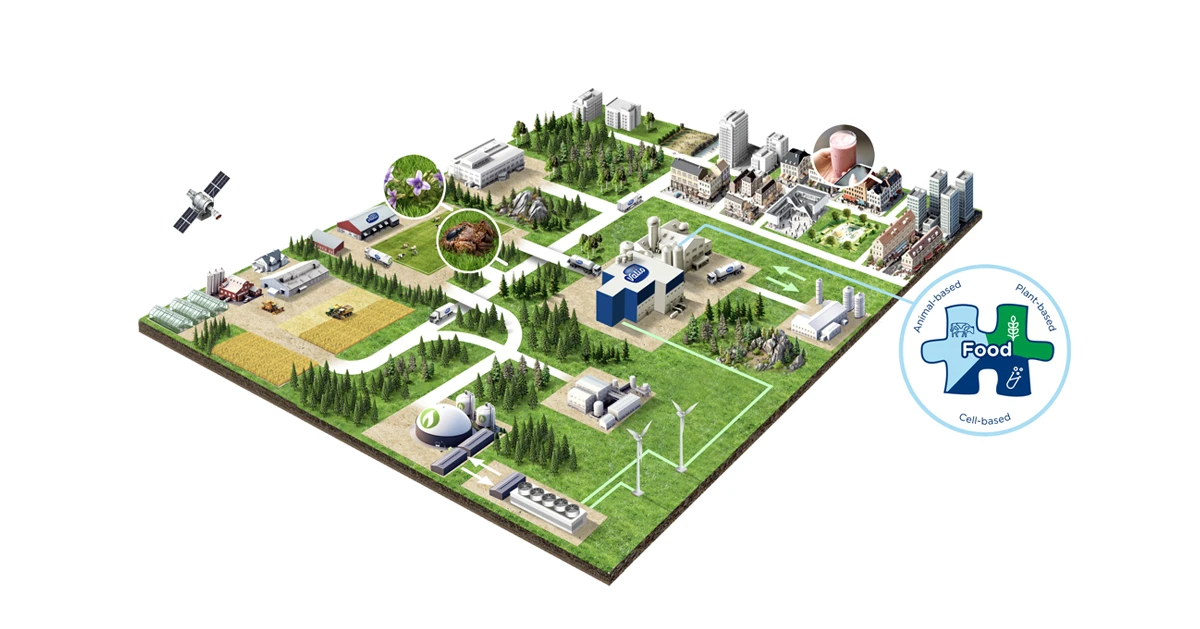
The food system of the future means that we will produce varied and nutritious food within the limits of the environment’s carrying capacity. The food system of the future will consist of several different forms of food production, some of which already exist and others we are currently exploring.
Both local and global food systems face numerous challenges, and as the world’s population grows, so does the demand for food. Climate change affects food production, and biodiversity loss poses a strong threat to food production as well. For this reason, the entire food system must be transformed to become more sustainable.
Natural resources must be used wisely
To ensure enough food in the world in the future, we need sustainably produced animal-based and plant-based foods, as well as new foods produced using cellular agriculture. All of these forms of food production depend on and support one another: for example, animal farms produce fertilizers for crop farms, and byproducts from crop farming are used as animal feed.
A sustainable food system is based on the circular economy and makes wise use of natural resources. Using byproducts of the food chain in food production and in the production of energy and fertilizers improves resource efficiency and reduces the environmental load.
Food 2.0 research programme
Valio is transforming the food system through research and innovations.
Valio is leading the Food 2.0 programme, which involves more than two hundred food system actors and comprises dozens of research projects. Through the Food 2.0 programme, we are developing solutions that will make food production more sustainable and more profitable.