The AGCLIMATE project, led by the Finnish Meteorological Institute and funded by Business Finland, and the Valio Food 2.0 program brought together researchers, farmers, companies, funders, and policymakers. The central question was: How can scientifically proven agricultural climate measures be adopted at scale, and who will pay for them?
Event materials can be downloaded at the bottom of the page. Please note that the materials are available only in Finnish.
Held on 1 October, the seminar featured 15 presentations and attracted more than 100 experts. Finland already has extensive knowledge of agricultural emissions and ways to reduce them, while measurement and modelling are advancing quickly. The next step is to connect science, farming practice, food system needs, and economic incentives.
Promising measures include soil carbon sequestration, optimized nitrogen use, lower N₂O emissions, and better water management. Solutions must suit each farm, field, and soil type: grassland renewal may drive N₂O emissions, while water management is especially important on peat soils.
Measures must also be practical and economically viable. Weak farm profitability limits investment, so transition costs cannot fall on farmers alone. Climate action should be treated as a shared investment across the food system.
Reliable primary data, common accounting principles, and robust measurement, reporting, and verification are essential for recognizing farm-level improvements. Data collected once should serve farmers, industry, retailers, financiers, and policymakers, supporting Scope 3 and SBTi targets, product footprints, and practical production development.
Digitalization and automation can make data collection easier for farmers, but methodologies must remain transparent and sufficiently harmonized to support comparability and sound decisions throughout the value chain.
So, who pays? Most likely, many actors together.
Subsidies will remain important, complemented by food system incentives, private finance, and emerging carbon and nature markets. Scope 3 targets may create demand for verified emission reductions and carbon sequestration, while the CRCF framework could support carbon farming. Credible measurement, independent verification, and registries are needed to build trust and prevent double counting. Farmers also need predictable, long-term incentives.
What did we learn?
The next challenge for Finland’s food system is no longer simply to develop new climate measures. Increasingly, the focus must be on building a functioning chain that links actions to measurable impacts and measurable impacts to economic value.
This requires closer collaboration between researchers, farmers, food companies, retailers, financiers, and the public sector. In practical pilot projects, climate impacts should be assessed alongside costs, feasibility, risks, and the distribution of benefits among stakeholders.
Ultimately, the question is not only which agricultural climate measures work, but how they can become an integral and scalable part of the Finnish food system. When reliable information flows throughout the value chain and climate benefits are translated into economic value, climate action can evolve from being seen as an individual cost into an investment that strengthens the competitiveness, resilience, and sustainability of the entire food system.
Seminar materials
Download materials from seminar speakers. Please note that the seminar was held in Finnish and thus materials are also available only in Finnish.
Food 2.0
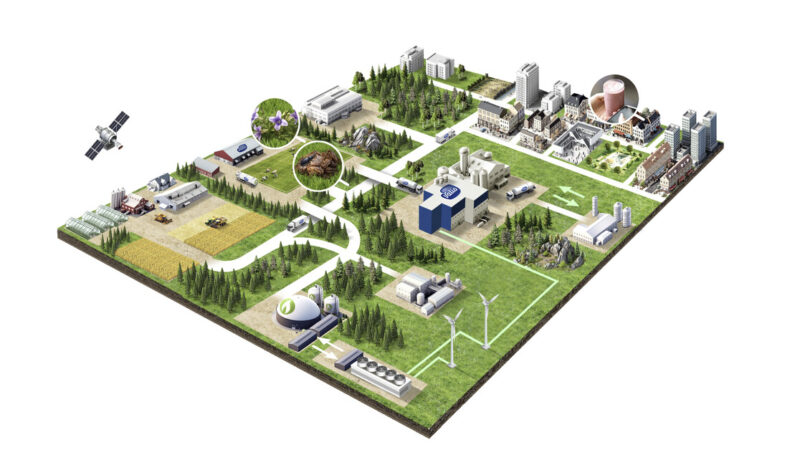
Food 2.0 is extensive research program, aiming to create a Finnish nature-smart food system in which growth, profitability and added value are built on the basis of sustainable production.