Valio’s business environment in 2025 was shaped by the geopolitical situation and uncertainties in the economy and global trade. Although the business environment was challenging, Valio’s net sales grew to EUR 2,422.7 million and surpassed the 2024 net sales record (EUR 2,278.5 million). The milk return, a measure of profitability, remained at a very high level.
Valio’s 120th anniversary year in 2025 was strong in terms of results: both net sales and the milk return, a measure of profitability, rose notably from the previous year and reached higher levels than ever before.
Valio’s financial performance is measured by the milk margin* and milk return**. The milk margin amounted to EUR 1,045.3 million (982.5 million), and the milk return was 56.0 cents per litre (52.2 c/l).
“We exceeded our targets in several business areas and in the operations of our subsidiaries. The growth of Valio’s brands and the strong performance in exports offset the otherwise moderate consumer demand in Finland. Net sales and profitability were also driven by successful product portfolio development and the strong performance of our own operations. During the year, we made several decisions that strengthen our productivity and competitiveness in the long term. At the same time, we unfortunately had to make decisions regarding the closure of production plants in Vantaa and Helsinki and the relocation of production to Joensuu and Riihimäki. A notable success in 2025 was the expansion of the Food 2.0 research and development programme’s ecosystem to a network of over 200 partners. Valio’s 120th anniversary was celebrated in many ways at various locations. We also celebrated our 120-year history nationwide in many ways,” CEO Annikka Hurme recaps the year.
Valio is owned by around 3,000 dairy farms through cooperatives, and Valio pays its profits to dairy farms through the cooperatives. The cost situation for dairy farms was better than during the Covid-19 pandemic and the war in Ukraine, when prices for fertilizers, energy, feed, and other farm inputs rose to record highs. However, at the end of 2025, costs were still about 10-15 percent higher than at the beginning of 2021.
Thanks to strong business performance, during the year Valio was able to raise the milk price paid to its cooperatives during the year. The average price paid per litre of milk to the cooperatives amounted to 54.1 cents (50.9 cents per litre in 2024).
Valio implemented its strategy as planned
Valio’s vision is to be the leading dairy and food company offering beloved brands and innovative solutions. Valio offers consumers sustainable, interesting, and delicious dairy and plant-based products, and serves as a partner to food industry professionals through its Valio Aimo® wholesale business. Additionally, Valio helps international industrial customers to develop premium products using specialty milk powders.
Valio’s domestic net sales were EUR 1,522.1 million (1,484.6 million), and Valio’s net sales from international operations totalled EUR 900.7 million (793.9 million).
“In our home markets in Finland, Sweden, and Estonia, both net sales and profitability developed favourably. Growth was driven particularly by snack products, such as PROfeel® protein snacks, as well as Valio Gefilus® and Balans products, which support wellbeing. The Valio Aimo® wholesale business also grew, and Aimo’s role as a partner to professional kitchens and wholesale customers was further strengthened,” Hurme notes.
In February, Valio acquired Raisio plc’s plant protein business, the related fixed assets, and the Härkis® and Beanit® fava bean brands. Through the acquisition, Valio further strengthened its role as a developer and market leader in plant-based products.
The PROfeel® range reached net sales of EUR 100 million, and the launch of PROfeel® puddings in the United States exceeded expectations. In addition to Finland, PROfeel® products are now sold in 15 countries, including the Baltics, Sweden, Poland, and Spain.
In Estonia, the new Alma brand quark bar was well received, and cheese exports continued to grow. consumers showed particular interest in Middagsmagi meal prep products and PROfeel® snacks. Valio started selling infant formula in China at the end of 2024 after obtaining export licenses for two consumer brands. In addition to baby food, sales of other specialty milk powders in China also increased.
Oddlygood, a manufacturer of plant-based products and owned by Valio and Mandatum Asset Management, once again outpaced the market, achieving net sales of EUR 83.4 million (53.1 million) last year. In terms of net sales, the UK market grew larger than the Finnish market. This was driven by the successful acquisition of Rude Health in 2024.
Valio’s exports account for about a quarter of Finland’s food exports
In 2025, the value of Valio’s exports from Finland amounted to approximately EUR 580.8 million (EUR 525.2 million), representing about 25 per cent of Finland’s total food exports. Valio’s biggest export products are industrial milk powder and industrial butter, which food industry customers use in their own production. In particular, the high global market price of butter boosted the value of exports.
Global market prices have a significant impact on Valio’s profitability, as nearly 40% of Valio’s net sales come from export markets. In 2025, Valio also gained several new customers for its specialty milk powders, and Valio plans to increase exports of these products in line with its strategy.
Improving productivity and investing in innovations
During the year, Valio advanced several production-related development projects and investments.
Work continued on the 60-million-euro investment to modernize the cheese production process at the Lapinlahti production plant. The project is scheduled for completion in 2026. The Seinäjoki powder plant renovation and refurbishment project, scheduled for completion in 2026, also continued. In Estonia, a new cheese maturation warehouse was completed at the Võru plant, improving the competitiveness and profitability of the international cheese business.
During the year, preparations were also made for previously decided production transfers that aim to streamline the production structure. The production of juices and berry soups as well as plant-based snacks and cooking products will be transferred from the Helsinki and Turku plants to Riihimäki. In addition, warehouse operations in Pitäjänmäki will be transferred to Riihimäki. Vantaa’s cheese production and the Kauhava plant operations, which Valio acquired from Raisio plc in March 2025, will continue in Joensuu.
Valio’s profit improvement programme that began in 2022 concluded in 2025, as planned. In the programme, Valio carried out hundreds of measures to reduce costs, increase cost awareness, generate additional revenue, improve processes, and reduce waste. The programme exceeded its profitability improvement targets. In 2025, Valio launched a new profit improvement programme extending to 2028. During the year, the large-scale enterprise resource planning project known as VALUE also progressed.
As of the end of the 2025 financial year, the data protection authority’s investigation of the December 2024 data breach and any related liability issues is ongoing.
Manure gas business progressed as planned
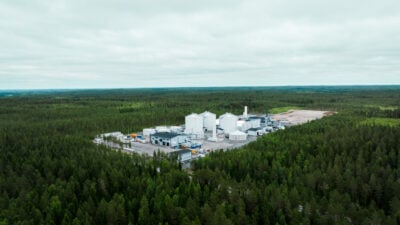
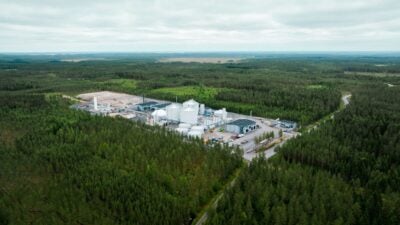
Suomen Lantakaasu Oy, the joint venture of Valio and St1Biokraft, made an investment decision to build the satellite plants included in the Upper Savo project. The Upper Savo project consists of the industrial-scale liquefied biogas production plant currently under construction in Kiuruvesi, as well as two satellite plants in Lapinlahti and Nurmes. Both satellite plants received environmental permits during the year and are scheduled for completion in 2026.
A second industrial-scale liquefied biogas production plant, currently under construction in Nurmo, is also scheduled to be commissioned in 2026. In Ostrobothnia, feasibility studies are currently underway for two biogas plant projects in the Kruunupyy-Pedersöre and Nivala-Sievi areas.
During the year, Suomen Lantakaasu Oy’s business progressed as planned towards the target of producing one terawatt-hour of biogas by 2030.
A growing ecosystem is transforming the food system
The Food 2.0 research and development programme, launched in 2024 and partially funded by Business Finland, has grown into an extensive ecosystem of over 200 partners in just two years. The five-year programme is developing solutions for building a resource-wise and sustainable food system while promoting the competitiveness of Finnish food exports.
As part of the Food 2.0 programme, Valio invested in the cellular agriculture start-up Melt & Marble in December. The company’s goal is to use precision fermentation to produce fat-based raw materials for the food industry. The collaboration supports the development of plant-based products and strengthens Valio’s position as an innovative player.
Valio’s sustainability work progressed in line with targets
In May, Valio made updates to the dairy farm sustainability programme, which focuses on improving animal welfare, increasing outdoor access for animals, reducing emissions and promoting farming practices that support biodiversity. A new action added to the programme is the establishment and management of wetlands. Through the sustainability programme, dairy farmers who own Valio were paid nearly 60 million euros. For mandatory actions applicable to all farms, one cent per litre of milk was paid. In addition, farms can earn up to two additional cents per litre of milk by choosing voluntary actions and an extra cent per litre of milk for carbon farming. Valio’s sustainability bonus encourages farmers to engage in climate and animal welfare actions that go beyond legislative requirements. In 2025, 94 percent of the dairy farmers opted for voluntary actions.
Valio’s Climate Programme progressed as planned. According to the 2025 greenhouse gas inventory, emissions from the milk value chain in Finland decreased by 21 percent compared with 2019, when carbon removals are excluded, and by 26 percent when carbon removals from carbon farming are conservatively taken into account.
Valio monitors dairy farm greenhouse gas emissions with the Carbo® Environmental Calculator. In total, 2,150 farms calculated the carbon footprint of their milk production. This represents about 80 percent of Valio’s total milk procurement. In 2025, the use of the calculator became established as a national tool covering nearly all cattle farming. Carbon farming actions were given more weight, and the area of arable land under carbon farming grew to 200,000 hectares (160,000 ha in 2024).
Year 2026
Valio’s focus in 2026 is on pursuing new growth and improving profitability and operational efficiency in line with its strategy.
“Consumption of dairy products is growing in emerging markets, such as Asia, while plant-based product consumption is growing in the Western world. We are focusing even more strongly on international growth, as export markets offer growth opportunities for value-added products. We are seeking growth particularly in the export of specialty milk powders and for our PROfeel® and Oddlygood brands. At the same time, we continue to actively develop our business in our home markets. We are building the food system of the future and working for a carbon-neutral milk value chain by 2035. The Food 2.0 project and Suomen Lantakaasu support Valio in achieving these targets,” Hurme says.
The operating environment remains uncertain and difficult to predict in 2026 as well. However, consumer demand seems to be gradually recovering, particularly in the home markets. Elsewhere in the world, the economy has already started to pick up. Trends in raw material and energy prices, as well as geopolitical risks, may continue to affect cost levels and demand. The heightened security situation in the Middle East creates uncertainty for Valio’s upcoming financial year. If the conflict continues or escalates, energy prices, freight costs and other related expenses are expected to rise. Valio is analysing the potential impacts of the conflict and making plans for alternative logistics routes and other necessary measures. Oil and other energy price increases are also widely reflected in the finances of Valio’s owner-entrepreneurs, among other things through higher prices for production inputs such as fuels and fertilizers.
Valio Group’s key figures in 2025
| 2025 | 2024 | Change | |
| Net sales, MEUR | 2,423 | 2,278 | 6.3 % |
| Milk margin, MEUR | 1,045 | 982 | 6.4 % |
| Milk return, c/l | 56.0 | 52.2 | 7.3 % |
| Milk volume, ML | 1,635 | 1,641 | -0.4 % |
| Equity-to-assets ratio | 55 % | 56 % | -1.8 % |
| Investments, MEUR | 135 | 120 | 12.5 % |
*Milk margin, MEUR =
Net sales less all other costs excluding the price paid to the cooperatives for raw milk, interest on shareholder loans, depreciation according to plan, supplementary payments to the pension fund, pension contribution refunds, and items not included in actual business operations, such as sales gains from sales of business operations, provisions, sales gains and losses from real estate sales, write-offs of non-current assets, costs arising from acquisitions of companies and business operations, and subsidiaries’ minority interest of the profit. The milk margin includes Valio Ltd’s taxes, with the tax share of the net profit corresponding to the amount of the average dividend percentage from the share capital, and taxes of subsidiaries. Taxes also include the cost effect of direct taxes resulting from depreciation deficit.
**Milk return, c/l =
Milk margin less estimated required financing for investments, and the figure is divided by the milk volume taken in from the owners of Valio Ltd.
Read more:Valio’s Financial Statement and Board of Directors’ Report and the Sustainability Report 2025 are available at Reports and Financial Statements.